Nov 06, 2025
Need Help? Answers?
We’ve helped hundreds design the right building, and we’ll do the same for you. Let’s turn your idea into a certified, installed reality. It starts with one call and ends with a structure that last for decades.
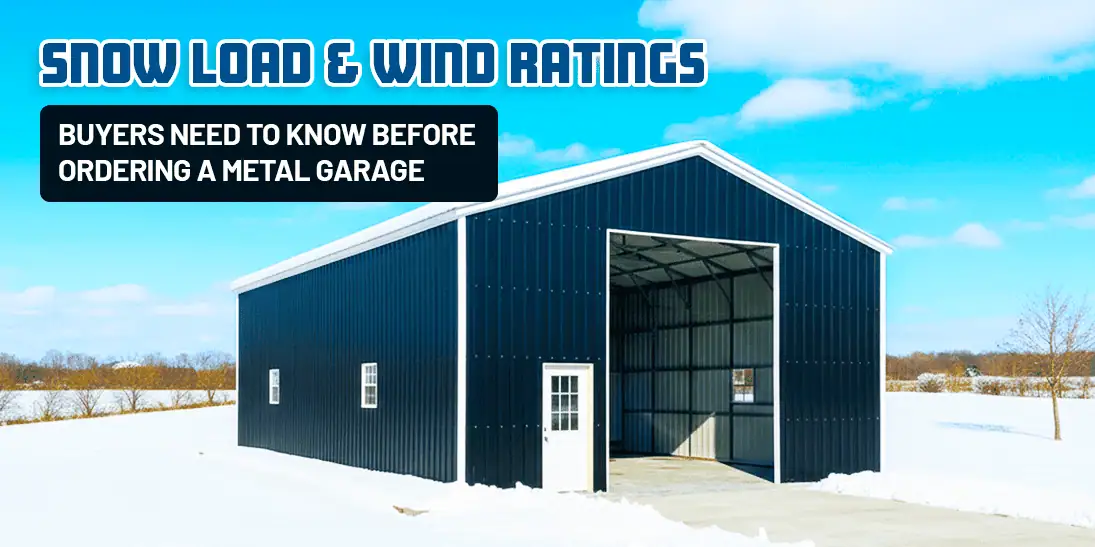
When most folks shop for a garage, they compare prices first. That’s a natural part of the buying process, but it’s also risky. A garage that looks like a deal on paper can end up costing you twice as much if it fails inspection. Counties don’t care what you paid. They care whether the building meets local codes for snow and wind.
If your garage isn’t certified for the right loads, you could be stuck with a structure you can’t permit or use. This guide will break down snow load and wind ratings in plain English so that you can order with confidence instead of guesswork.
Snow load is just a fancy way of saying how much weight your roof can handle when snow piles up. It’s measured in pounds per square foot (psf).
A roof rated at 30 psf can safely support 30 pounds of snow spread across every square foot. That might work fine in Kentucky. But if you’re in upstate New York, local codes may call for 50 psf or more.
The standard reference here is the International Building Code (IBC). It spells out how to calculate safe limits so buildings don’t cave in after a heavy storm.
A building’s wind speed rating tells you how fast the wind can blow before the structure is at risk. It’s expressed in miles per hour.
Engineers use ASCE 7-16 wind maps to figure this out. For example:
The difference matters. A garage that works fine in Kansas might not even get a permit near the Gulf Coast.
Every state and county can adopt its own version of the building code. This guarantees that every region is fully prepared for the average wind speeds and snow loads that occur each year. But it also guarantees that these requirements can change every 30 miles down the road.
For example, a building along the Texas Gulf Coast, a region prone to high winds and hurricanes, will need to have much higher wind ratings than a region like New England that sees abundant snowfall.
In the end, this can require you to customize your metal building with reinforced framing and paneling, which can affect your structure’s final price. Despite the added cost, however, it can make all the difference when Mother Nature comes knocking.
Not all garages are created equally. Not by a long shot. Knowing the difference between the two can make a huge difference in how much you spend in the end and the quality of the final product you receive.
| Building Type | Details |
|---|---|
| Non-Certified Metal Buildings |
|
| Certified Metal Buildings |
|
Higher ratings mean stronger steel, heavier frames, and deeper foundations. All of that adds cost to your metal building project. How does that translate to your building? For example, a 12×20 non-certified in Georgia will cost around $3,500. That same building configuration certified for New York snow loads will cost $5,500 or more. That $2,000 difference isn’t a markup; it’s the price of thicker materials that keep your roof standing in a storm.
It’s important to ask questions when buying a steel building. You’ll want to ask the following before signing on the dotted line:
Now that you know a little bit about how snow and wind loads work, let’s explore some of the best pieces of advice for new customers:
You want to know that your building is safe, and that the things you intend to protect actually stay protected. A certified metal building from ValorForge is
ValorForge is proud to be THE source for high-quality certified metal buildings, metal barns, metal garages, and steel structures, large and small. We’re veteran-owned and operated and dedicated to providing customer service that sticks with you from first call to installation and beyond.
Every building we install is engineered to local codes, features included delivery and installation, and backed by a 20-year warranty.
Call us today at (336) 755-9148 for more information on our certified steel buildings. With ValorForge by your side, you’ll never worry about failing inspections or cutting corners.
We’ve helped hundreds design the right building, and we’ll do the same for you. Let’s turn your idea into a certified, installed reality. It starts with one call and ends with a structure that last for decades.